
The Basics
Korean dining etiquette is about respect.
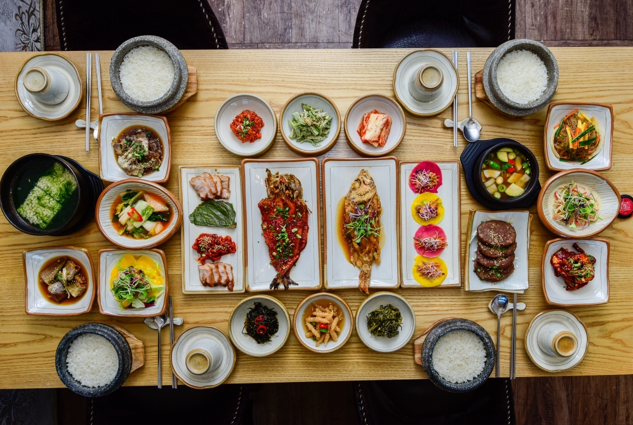
When you sit at a Korean table, you share food. Rice and soup belong to you. Kimchi, banchan, grilled meat, and stews belong to everyone. This shared table has its own manners.
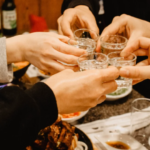
Both hands show respect. When receiving or passing a drink, bowl, or object to an older person, use both hands, or support one hand with the other.
Age shapes the table. It affects who starts eating, who pours, and who makes the first toast. Context matters. A meal with friends is relaxed. A meal with elders is more formal.
In formal settings and homes, the oldest or most senior person begins eating first. Younger people wait. With friends, people simply start together. You do not need a big gesture. A short pause is enough.
The Two Essential Phrases
One phrase opens the meal. Another closes it.
Before eating, say Jal meokgetseumnida (잘 먹겠습니다). It means “I will eat well.” People say it when someone has cooked for them, bought the meal, or invited them.
After eating, say Jal meogeotseumnida (잘 먹었습니다). It means “I ate well.” People say it when someone has hosted them or paid for the meal.
Both phrases express gratitude. Koreans remember them well.
Spoon and Chopsticks
Korean tables have two utensils. The spoon is for rice and soup. Chopsticks are for banchan, meat, vegetables, noodles, and other solid food.
Korean chopsticks are made of metal. They are thinner, flatter, and more slippery than wooden chopsticks. They take practice. Many visitors struggle with them at first. If a piece of food does not cooperate, the spoon is a good backup.
Traditionally, you hold one utensil at a time.
Some actions are avoided:
- Do not point, wave, or tap with chopsticks.
- Do not stick chopsticks upright into rice. It resembles funeral rites.
- Do not pass food from your chopsticks to someone else’s. Use a plate or serving utensils.
When you pause, rest chopsticks on the chopstick rest, the table edge, a napkin, or beside the bowl.
The Rice Bowl
In Korea, the rice bowl stays on the table. Rice is eaten with the spoon. You do not lift the bowl to your mouth. This differs from some other Asian dining cultures.
Plain rice is eaten cleanly. But some dishes are made to be mixed. Bibimbap, gukbap, and fried rice are mixed dishes.
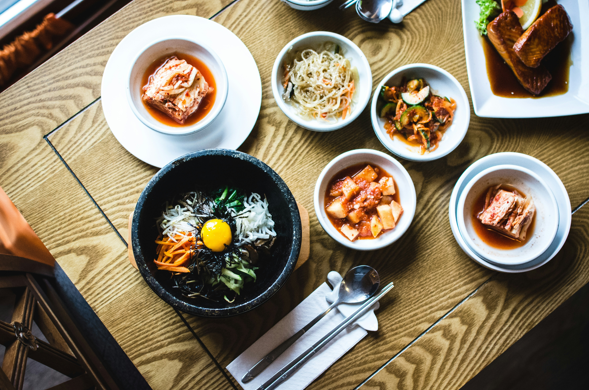
Photo: Korea Tourism Organization
Soups and Stews
Some soups are served individually. Galbitang, seolleongtang, yukgaejang, miyeokguk, and tteokguk come in your own bowl.
Some stews are shared. Kimchi jjigae, budae jjigae, gamjatang, jeongol, and hot pots sit in the middle of the table. Use the ladle or serving spoon. Do not put your personal spoon into the shared pot, unless the group is very casual.
Shared stews are boiling hot. Soft tofu, rice cakes, potatoes, and dumplings hold heat. Take careful bites.
Shared Dishes and Banchan
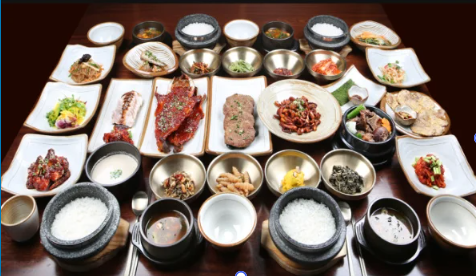
Korean meals are communal. Banchan surround the table. Grilled meat, lettuce, sauces, and stews sit in the center.
Simple habits keep the shared table pleasant:
- Take a small amount at a time.
- Do not dig through a dish looking for the best piece.
- Do not touch food and put it back.
- Use the tongs, scissors, or ladle when they are provided.
Banchan are eaten all through the meal. They are not appetizers. They are strongly seasoned because they are eaten with rice. Taste politely. Leave quietly what you do not like.
Drinking Etiquette
You pour drinks for others, not only for yourself. Notice empty glasses.
For elders, hold the bottle with one hand and support your pouring hand with the other. Receive a drink with both hands on the glass. With elders, turn your head slightly away when taking a sip.
Do not fill your own glass first in a formal group. Do not pressure people to drink. Declining is fine. You can say Sul mot masyeoyo (술 못 마셔요), “I cannot drink,” or Sul an masyeoyo (술 안 마셔요), “I do not drink.”
All the rules share one purpose: respect the people at the table, the food, and the shared space.