

A child’s first birthday is a particularly meaningful occasion in Korea. Known as Doljanchi (돌잔치), this celebration marks the completion of a baby’s first year of life. It is traditionally celebrated with family gatherings, a specially decorated birthday table, traditional food, and a unique activity called Doljabi (돌잡이).
One of the most interesting parts of a Korean first birthday celebration is Doljabi, during which a baby chooses an object from several items placed in front of them. Each object represents a different hope or prediction for the child’s future.
What Is Doljanchi?
Doljanchi is a traditional Korean celebration held when a child turns one year old. The word “Dol” refers to a child’s first birthday, while “Janchi” means a feast or celebration. Together, Doljanchi refers to a first-birthday celebration. In the past, reaching the age of one was a significant milestone. Like Baekil, the 100-day celebration, Doljanchi developed during a time when infant mortality was much higher than it is today. A child’s first year involved many health risks, and surviving that period was considered a major achievement. Families therefore gathered to celebrate the child’s growth and wish for a long, healthy, and prosperous life. Today, Doljanchi is often celebrated with an elaborate family gathering. Some families invite relatives and friends to a hotel banquet hall or restaurant, while others prefer a smaller celebration at home.
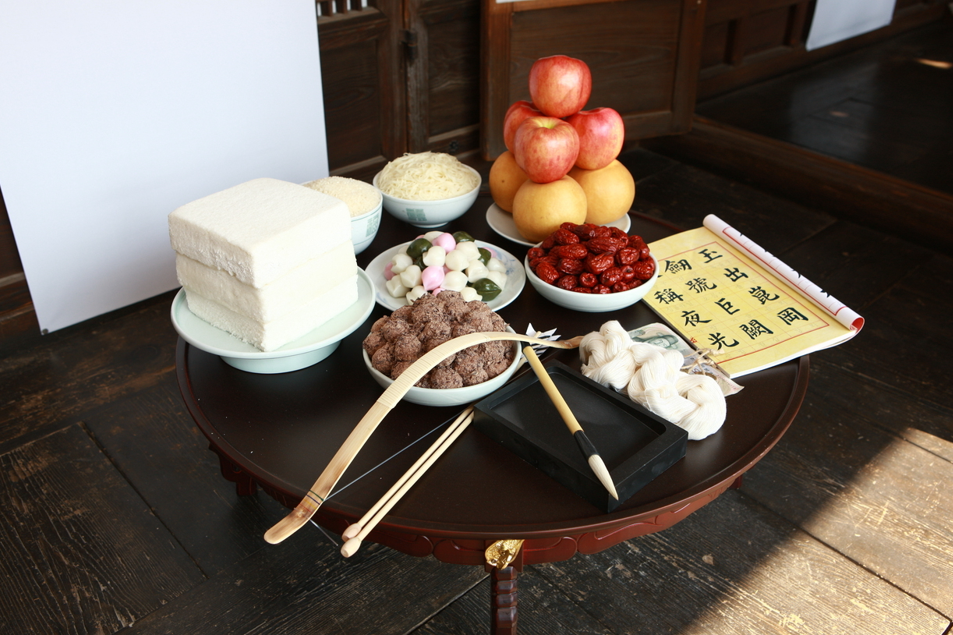
The Doljanchi Table (Dolsang)
A central feature of the celebration is the Dolsang (돌상), a specially arranged table prepared for the child’s first birthday. The table is traditionally decorated with symbolic foods and objects that represent health, longevity, prosperity, and good fortune.
Common items include:
- Rice cakes (Tteok): Various traditional rice cakes are arranged on the table.
- Fruit: Fresh fruit symbolizes abundance and a prosperous life.
- Rice: Represents nourishment and a life without hunger.
- Noodles: Long noodles traditionally symbolize longevity.
- Jujubes (Daechu): Often associated with fertility, abundance, and family prosperity.
The exact arrangement varies by family, region, and individual preferences. Modern Doljanchi tables may also include flowers, decorative signs, balloons, and personalized ornaments.
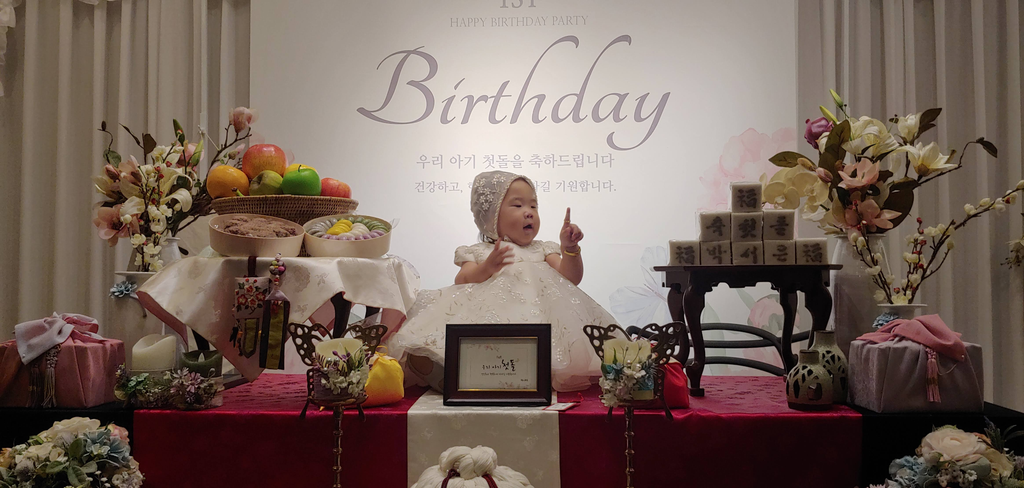
What Is Doljabi?
Doljabi is one of the most recognizable customs of a Korean first-birthday celebration. During this activity, several objects are placed in front of the baby, who is encouraged to choose one. Traditionally, the selected object is interpreted as a symbolic prediction of the child’s future career, personality, or fortune. Although Doljabi is primarily a playful tradition today, it reflects the hopes and aspirations that parents and relatives have for the child.
Traditional Objects and Their Meanings
1. Thread or Yarn (Sil)
Thread symbolizes a long and healthy life. When a baby chooses thread, it is traditionally interpreted as a wish for longevity and good health.
2. Money (Don)
Money represents wealth, financial success, and prosperity. Choosing money is often interpreted as a sign that the child may enjoy financial abundance in the future.
3. Rice or Rice Cake (Ssal or Tteok)
Rice symbolizes abundance, nourishment, and a life without hunger. It represents the hope that the child will always have enough food and live comfortably.
4. Pencil or Brush (Yeonpil or But)
A pencil or traditional writing brush represents education, knowledge, and academic achievement. It is associated with the hope that the child will become intelligent and successful in their studies.
5. Book (Chaek)
A book symbolizes learning, wisdom, and intellectual development. Choosing a book is traditionally associated with academic success and a love of knowledge.
6. Stethoscope
A stethoscope is a modern addition to Doljabi. It represents medicine and healthcare, suggesting that the child may become a doctor or work in the medical field.
7. Microphone
A microphone represents communication, entertainment, and public performance. It is sometimes associated with a future career as a singer, entertainer, broadcaster, or public speaker.
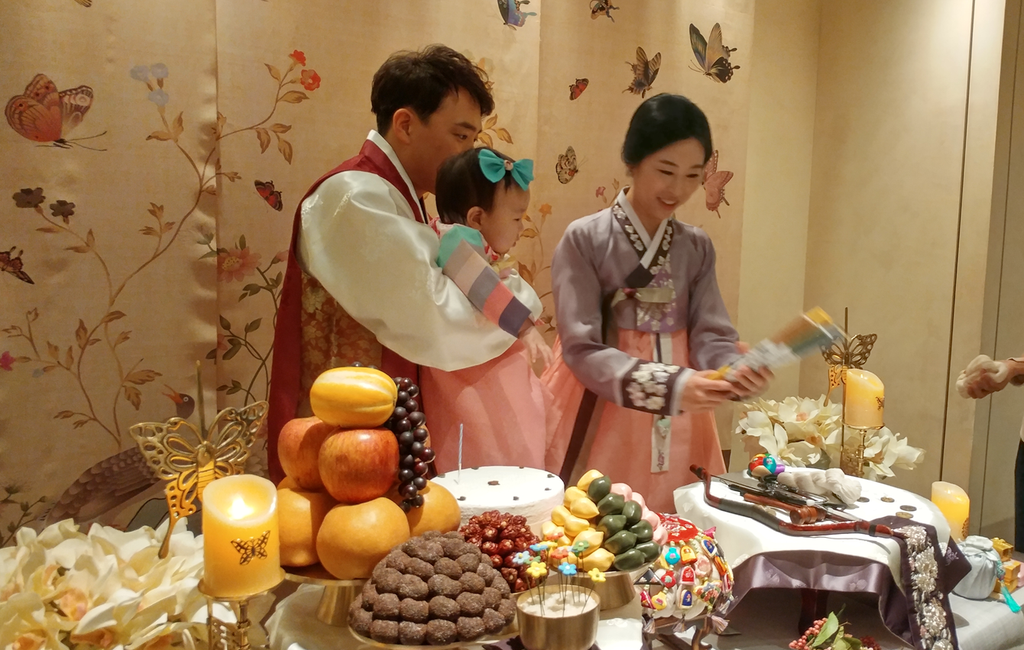
The objects used in Doljabi are not fixed. Families often add or replace items to reflect modern occupations and personal preferences.
How Is Doljabi Performed?
Doljabi usually takes place after the family and guests have gathered around the birthday table. The objects are arranged in front of the baby, often on a small table or mat. Parents then encourage the child to reach for one of them. Guests watch closely to see which object the baby chooses. The selected item is interpreted according to its traditional meaning, and the moment is often recorded in photographs or videos. Some families allow the baby to choose more than one object. Others repeat the activity if the baby does not immediately pick anything. There are no strict rules governing the activity. Its main purpose is to create a memorable moment and celebrate the child’s future with family and friends.
Traditional Food at Doljanchi
Food is another important part of Doljanchi. Traditional rice cakes are especially prominent because they have long been associated with Korean celebrations and special occasions.
Common foods include:
- Baekseolgi: White steamed rice cake symbolizing purity and a healthy beginning.
- Susu-pat-tteok: Rice cake made with sorghum and red beans, traditionally associated with protection from misfortune.
- Songpyeon: Half-moon-shaped rice cakes commonly associated with Chuseok, sometimes included in celebratory food arrangements.
- Fruit: Seasonal fruit is arranged to represent abundance and prosperity.
The foods served at a modern Doljanchi banquet may also include Korean dishes, meat, seafood, noodles, and desserts.
How Koreans Celebrate Doljanchi Today
Modern Doljanchi celebrations often combine traditional customs with contemporary event planning.
Some families reserve a private banquet room at a hotel or restaurant. Others organize a small gathering at home with close relatives.
Common features of a modern Doljanchi include:
- A professionally decorated Dolsang
- Traditional Korean clothing called Hanbok
- A birthday cake
- Family photographs and videos
- A Doljabi activity
- A meal shared with relatives and guests
- Small gifts or souvenirs for guests
Many parents dress their baby in Hanbok for photographs and the Doljabi ceremony. Some choose traditional clothing for the entire celebration, while others use modern outfits.
Professional photography is also common, as the first birthday is considered an important family milestone.


Is Doljanchi Still Popular in Korea?
Yes. Doljanchi remains a recognizable family celebration in contemporary Korea, although its scale and format vary. In the past, the occasion was closely connected to the traditional belief that surviving the first year of life was a major achievement. Today, it is more commonly viewed as an opportunity to celebrate a child’s growth and gather family members. Some families hold large celebrations with extended relatives and friends, while others choose a simple meal and a small birthday table. Doljanchi offers an interesting insight into Korean family culture. The combination of symbolic food, traditional clothing, and Doljabi reflects how Korean families express their hopes for a child’s health, happiness, and future.

