

A rooster’s crow can mark the end of night and the beginning of a new day. In Korean traditions, that familiar sound also carried a sense of mystery: it was believed to announce the arrival of light, drive away evil spirits, and sometimes foretell the birth of a new ruler. The Rooster is the tenth of the twelve Korean zodiac animals. Its sign is yu (유, 酉). In traditional interpretations, the rooster is associated with punctuality, courage, and good fortune. Its comb, spurs, and dependable crow also inspired a set of five virtues.
Quick Facts About the Rooster Zodiac
- Korean name: 닭 (dak)
- Zodiac sign: 유 (酉, yu)
- Position: Tenth of the twelve zodiac animals
- Traditional hours: 5–7 p.m., called yusi (유시, 酉時)
- Direction: West
- Lunar month: The eighth lunar month
- Main associations: Daybreak, new beginnings, protection, courage, reliability, and the five virtues
- Birth Years: 1945 · 1957 · 1969 · 1981 · 1993 · 2005 · 2017 · 2029
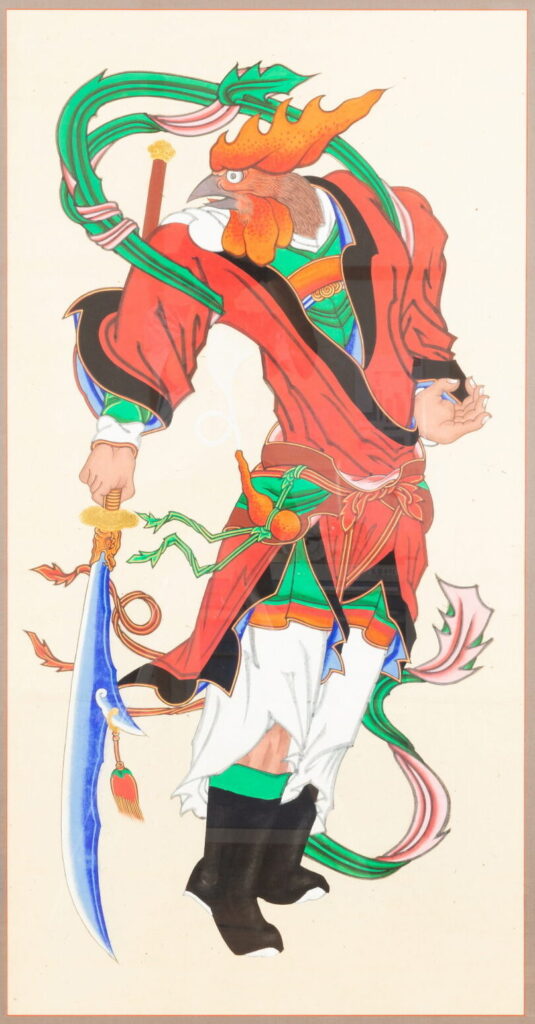
Photo: National Folk Museum of Korea
The Rooster in the Zodiac Cycle
The Rooster year returns every twelve years. Within the longer 60-year cycle, it combines with the five elements to form five different Rooster years.
| Rooster year | Korean name |
|---|---|
| Water Rooster | 계유 (癸酉, gyeyu) |
| Wood Rooster | 을유 (乙酉, eulyu) |
| Fire Rooster | 정유 (丁酉, jeongyu) |
| Earth Rooster | 기유 (己酉, giyu) |
| Metal Rooster | 신유 (辛酉, sinyu) |
The Rooster also belongs to the traditional system used to describe time and direction. Its two-hour period is from 5 to 7 in the evening, and its direction is due west. These zodiac associations sit alongside another powerful image of the rooster: the bird that crows at dawn and signals the return of daylight.
The Five Virtues of the Rooster
A traditional saying describes the rooster as embodying five virtues. Each one is connected to a visible part of the bird or to its behavior. Its comb represents mun (문, 文), or civil refinement. Its spurs represent mu (무, 武), or military strength. The rooster’s fearlessness in a fight stands for yong (용, 勇), or courage. Its habit of sharing food is associated with in (인, 仁), or benevolence. Finally, its regular crow at daybreak represents sin (신, 信), or trustworthiness. Together, these qualities make the rooster more than a sign of alertness. It becomes a model of discipline and good character—one that combines strength with generosity and reliability.
The Rooster as a Herald of Daybreak
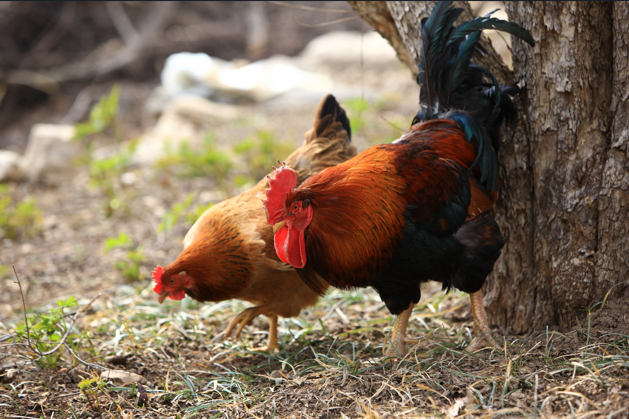
Before clocks were common, the rooster’s crow helped people mark the passage of time. Its call was especially useful at night or on cloudy mornings, when it could be difficult to tell whether dawn was near. People also believed the rooster had the power to chase away what belonged to darkness. According to popular tradition, when it pecked the ground, shook its tail, and crowed loudly, wild animals returned to the mountains and evil spirits hid away. The rooster was therefore seen as an auspicious bird that announced the arrival of light. This role gave the rooster a place at the boundary between night and day. Its crow did not simply report that morning had come; it seemed to bring the new day into being.
The Rooster in Creation Stories and Founding Myths
In Korean shamanic stories and founding myths, a rooster’s crow could signal a beginning on a much larger scale: the creation of the world or the birth of a ruler. The Jeju shamanic myth Cheongjihwang Bonpuri describes the Heavenly, Earthly, and Human Sovereign roosters lifting their necks, beating their wings, and crowing. Their calls announce daybreak in the east, marking the start of the world’s creation. A rooster also appears in the story of Gim Al-ji, a legendary ancestor of the Silla royal family. One day, a white rooster was heard crowing beneath a tree near a golden chest. Inside the chest was a baby boy. Because he had been found in a golden chest, the child received the surname Gim (김, 金), meaning “gold.” The white rooster’s call announced the arrival of a future ruler and linked the child’s birth with light and good fortune. In these stories, the rooster’s voice connects ordinary time with moments of transformation. A crow might mark the start of the day—or the beginning of a new society.
The Rooster in Korean Art
Roosters appear in folk paintings and other traditional objects as symbols of auspiciousness, vigilance, and the promise of a new beginning. Their upright posture and vivid feathers made them striking subjects for artists, while their association with dawn gave the images added meaning. A rooster in a painting may suggest the hope that good fortune is approaching. Its image can also recall the five virtues or the belief that its crow protects a home from harmful forces. The zodiac guardian image offers another view of the animal, placing the rooster among the figures that protect and represent the twelve zodiac signs.
What the Rooster Represents in Korean Culture
The Rooster brings together traits that might seem different at first: it is a guardian of the home and a sign of new beginnings, but also a bird that keeps time with an unchanging call. Its courage is balanced by generosity, and its strength is linked to discipline and trust. For readers discovering the Korean zodiac, the Rooster offers a vivid example of how an everyday animal can become a cultural symbol. Through folk beliefs, myths, paintings, and literature, its crow came to stand for the moment when darkness gives way to light—and something new can begin.
Read Next
Dream Interpretation in Korean Culture: Lucky and Unlucky Dreams –

