
In Korea, a strange or vivid dream may prompt someone to ask, “What do you think it means?” The traditional practice of interpreting dreams is called haemong (해몽). In folk belief, a dream could be seen as a sign of good or bad fortune, or as a hint about something to come.
Dream interpretation is not a fixed system. The same dream can be understood differently depending on its details, the dreamer’s circumstances, and the person interpreting it. These meanings are part of folklore, not reliable predictions of the future.
Quick Facts About Korean Dream Interpretation
- Dream interpretation: 해몽 (haemong)
- Dream divination: 몽점 (mongjeom), interpreting a dream as an omen
- Lucky dream: 길몽 (gil-mong)
- Unlucky dream: 흉몽 (hyung-mong)
- Common dream symbols: Pigs, dragons, ancestors, water, and everyday objects
- Important to remember: Traditional interpretations vary and are not scientific predictions
What Is Haemong?
Haemong means interpreting or explaining a dream. The related term mongjeom refers to using a dream to divine whether something might bring good or bad fortune. In traditional Korean belief, dreams could be interpreted as signs of future events. People might consider what appeared in the dream, what happened, and how the dream felt. A familiar image could have a positive or negative meaning depending on the story around it. Interpretations also varied by region and tradition, so there was no single dream dictionary shared by everyone.
A Historical Example: One Dream, Two Interpretations
A story in Samguk Yusa (삼국유사), a medieval collection of Korean history and legends, shows how the same dream could be interpreted in opposite ways.

Before becoming king, Wonseong (원성왕) dreamed that he took off his official headgear, put on a white hat, held a twelve-string zither, and entered a temple well. One interpreter saw these images as bad omens: losing his position, facing punishment, and going to prison. Achan Yeosam (아찬 여삼), however, offered a favorable reading. He said the white hat foretold a royal crown and entering the well meant entering the palace.
In the story, Wonseong later becomes king, so Yeosam’s interpretation proves to be the favorable one. The tale shows how the meaning of a dream could depend on the person interpreting it.
Gil-mong and Hyung-mong: Lucky and Unlucky Dreams
A lucky dream is called gil-mong (길몽), while an unlucky dream is called hyung-mong (흉몽). Traditional interpretations often associate dreams of pigs, dragons rising into the sky, ancestors offering food, or feces with good fortune, wealth, or success. A dream about losing teeth, on the other hand, has often been treated as an unsettling sign.
These categories are not fixed. The same dream can be interpreted differently depending on its details, the dreamer’s circumstances, and the person explaining it. Some folk interpretations even read an unpleasant-looking dream as a positive omen. A dream’s traditional meaning should be understood as folklore, not as a reliable prediction of what will happen.
Common Dream Symbols in Korean Folklore
The meanings below are examples of traditional interpretations. They are not universal, and details in the dream can change how it is understood.
| Dream image | Traditional interpretation |
|---|---|
| Pig (돼지) | Often considered a lucky dream associated with wealth, good fortune, or abundance. |
| Feces or urine (똥·오줌) | Traditionally linked with money or a windfall in some interpretations. |
| Dragon rising into the sky (용이 하늘로 오르는 꿈) | Associated with becoming a notable or respected person. |
| Ancestor offering food or speaking (조상이 음식을 주거나 말을 거는 꿈) | Often regarded as a favorable sign. |
| Falling teeth (이가 빠지는 꿈) | Traditionally treated as an unsettling omen, sometimes connected with concern about older relatives. |
| A bright, clear dream | Its vividness could make it feel especially significant to the dreamer. |
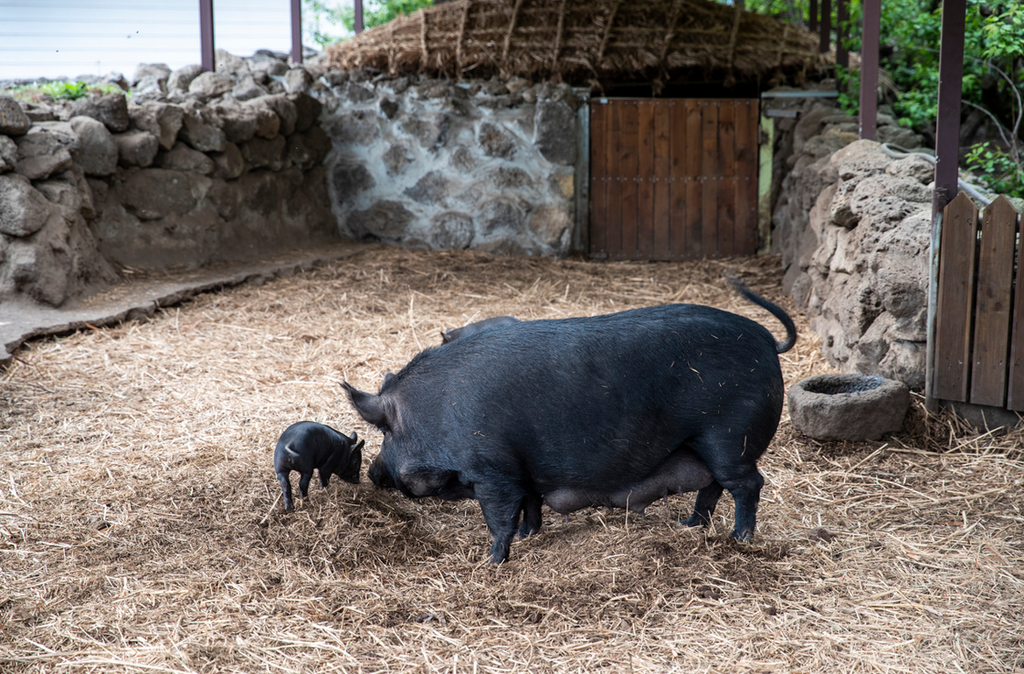
A pig dream is a particularly familiar example. Pigs have long been associated in Korean folk belief with fortune and prosperity, so dreaming of one is often described as a good sign.
Some interpretations use a kind of reversal: an image that seems frightening or unpleasant might be read as a favorable sign. Other interpretations rely on cultural associations, such as seeing a dragon as a powerful creature or a pig as a symbol of abundance. These approaches can overlap, and interpretations differ from one person to another.
Taemong and Other Dreams
Taemong (태몽), or a traditional pregnancy dream, is one specific type of dream with its own customs and symbols. It is believed to be connected with the conception or future of a child. General haemong, however, covers many kinds of dreams about fortune, family, work, money, and everyday concerns.
Dream Interpretation Today
Some people today still look up dream meanings online or ask family members what a dream might signify. Others treat dream interpretation as a playful conversation or a way to reflect on what has been on their minds.
Dreams can feel meaningful, but folk interpretations cannot reliably foretell events. Their cultural interest lies in how people connect dream images and stories with hopes, fears, and everyday life.
Korean Words and Expressions About Dreams
The Korean word kkum (꿈) means “dream,” but it appears in many expressions with related meanings.
- Kkumgyeol (꿈결): Something that passed fleetingly, “like a dream.”
- Kkumjari (꿈자리): A dream and the omen people may read from it. If someone says kkumjari-ga dwi-sung-sung-hae (꿈자리가 뒤숭숭해), they mean their dream left them feeling unsettled.
- Kkumttaem (꿈땜): The belief that a dream has taken the place of something that might otherwise happen in real life. People may use the word when an expected event, good or bad, does not come to pass.
- Yongkkum (용꿈): Literally a “dragon dream,” and an expression for a dream associated with extraordinary luck.
- Gaekkum (개꿈): A meaningless or unrealistic dream.
Dreams also appear in many Korean sayings:
- Kkum-boda haemong-i jota (꿈보다 해몽이 좋다): “The interpretation is better than the dream.” It describes giving a positive spin to something.
- Tteok jul saram-eun kkumdo an kkuneunde gimchitgukbuteo masinda (떡 줄 사람은 꿈도 안 꾸는데 김칫국부터 마신다): Literally, “The person who might give you rice cake hasn’t even dreamed of it, but you’re already drinking kimchi broth.” It warns against getting ahead of yourself.
- Kkumkkun semman chira (꿈꾼 셈만 치라): “Just count it as a dream.” People may say this to comfort someone after a loss or disappointment.
Other expressions, such as kkume tteokmat bo-deut (꿈에 떡맛 보듯, “like tasting rice cake in a dream”), describe a pleasure that is brief or unsatisfying. Together, these words and sayings show how Korean uses dreams to talk about omens, hopes, disappointment, and things that quickly pass.
Why Korean Dream Interpretation Is Interesting
Korean dream interpretation brings together folklore, symbolism, and everyday conversation. A pig, a dragon, or a family member appearing in a dream might prompt different interpretations, depending on who had the dream and how they understood it. Learning about haemong offers a glimpse into how traditional beliefs have shaped the way people talk about dreams—and how even an ordinary dream can become a subject of family discussion.
Read Next
Taemong (태몽): Korean Pregnancy Dreams, and Meaning –

