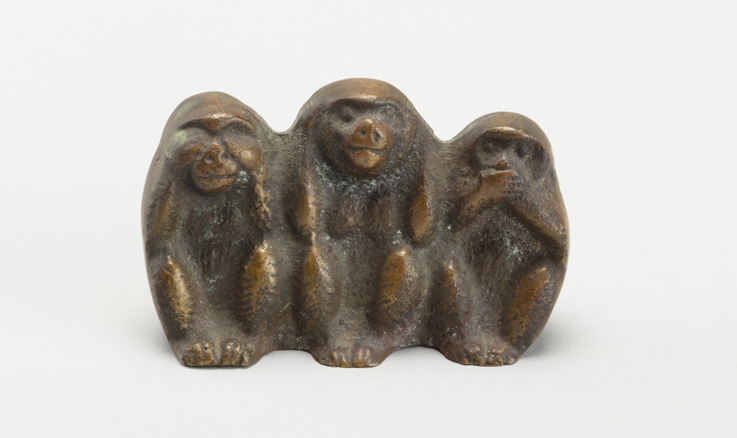

A clever trickster, a loving parent, or a guardian protecting a Buddhist monk—the monkey has played many roles in Korean culture. Although monkeys were not native to the Korean Peninsula, they became familiar figures through stories, religious imagery, paintings, and decorative objects. The Monkey is the ninth of the twelve Korean zodiac animals. Known as wonsungi (원숭이), or by the older name jannabi (잔나비), it is traditionally associated with intelligence, adaptability, and skill. Its mischievous side also made it a useful character for stories about human weaknesses.
Quick Facts About the Monkey Zodiac
- Korean name: 원숭이 (wonsungi)
- Older Korean name: 잔나비 (jannabi)
- Zodiac sign: 신 (申, sin)
- Position: Ninth of the twelve zodiac animals
- Traditional hours: 3–5 p.m., called sinsi (신시, 申時)
- Direction: West-southwest
- Lunar month: The seventh lunar month
- Main associations: Cleverness, practical skills, adaptability, family affection, protection, and longevity
- Birth Years: 1944 · 1956 · 1968 · 1980 · 1992 · 2004 · 2016 · 2028

Photo: National Folk Museum of Korea
Jannabi (잔나비): An Older Name for the Monkey
Visitors learning about Korean zodiac signs may encounter both wonsungi (원숭이) and jannabi (잔나비). They refer to the same animal. Wonsungi is the everyday Korean word used today. Jannabi is an older name that survives in expressions such as jannabi-tti (잔나비띠), meaning the Monkey zodiac sign. You may therefore hear someone describe their birth sign as either wonsungi-tti (원숭이띠) or jannabi-tti.
Cleverness and the Monkey-Year Personality
In traditional zodiac readings, the Monkey is associated with a quick mind, resourcefulness, and an ability to adapt. Its skillful hands and human-like behavior helped inspire the idea that Monkey-year people are good at learning practical tasks and finding solutions. Korean zodiac sayings sometimes describe them as talented with their hands. Other interpretations connect the sign with an aptitude for numbers or technical work.
The same cleverness can have a less flattering side in folklore. A resourceful monkey may become a trickster, using imitation or deception to get what it wants. Stories about monkeys therefore explore both the value of intelligence and the problems caused by relying too heavily on tricks. These personality descriptions belong to traditional fortune-telling culture. A birth-year animal does not determine someone’s abilities, career, or character.
A Familiar Animal Through Stories and Art
Unlike cattle, dogs, or pigs, monkeys were not ordinary animals in traditional Korean village life. Nevertheless, people encountered their images through storytelling, religious traditions, performances, and objects. This makes the Monkey an interesting zodiac animal: its cultural importance did not depend on being a familiar farm animal. Stories and artworks gave people ways to imagine its movements, expressions, and behavior. The monkey’s resemblance to humans was especially useful. An artist or storyteller could make it seem affectionate, ridiculous, calculating, or surprisingly wise.
Protection and Buddhist Connections
The Monkey was not always viewed favorably. Some older beliefs associated it with bad luck or trickery. Alongside these ideas, however, monkeys also developed protective and auspicious meanings. Buddhist traditions and cultural exchanges with neighboring countries contributed to this wider range of imagery. Monkey figures could appear as guardians, while clay monkeys served as protective, decorative, or funerary objects.
The Chinese novel Journey to the West, known in Korean as Seoyugi (서유기, 西遊記), also helped spread the image of a powerful monkey protecting a Buddhist monk. Its Monkey King, Son Ogong (손오공), combines extraordinary abilities with a troublesome, rebellious nature. This mixture fits the monkey’s broader cultural image: cleverness can cause trouble, but it can also protect others.
Monkeys, Peaches, and Long Life
In traditional art, a monkey holding a peach can express a wish for longevity. The peach is a familiar East Asian symbol of long life, giving the scene a meaning beyond an animal simply holding food. Other works show a mother monkey with her young. These images emphasize affection, care, and hopes for descendants. They offer a gentler view of an animal often remembered as a mischievous trickster. Monkey imagery appears on ceramics, paintings, carvings, and small household objects. Looking at what the monkey holds—and whether it appears alone, with its young, or beside a religious figure—can help explain the artist’s intended meaning.
What the Monkey Represents in Korean Culture
The Monkey brings several contrasting qualities together. It is intelligent but sometimes deceitful, playful but capable of protection, and comic yet affectionate toward its family. These different roles make it more than a simple personality symbol. Through the Monkey, Korean stories and artworks explore how people use their talents, treat their families, challenge authority, and protect others. For readers discovering the Korean zodiac, the Monkey is a reminder that each animal has a cultural life beyond its place in the twelve-year cycle.
Read Next
Dream Interpretation in Korean Culture: Lucky and Unlucky Dreams –

