
During Seollal, millions of Koreans travel back to their hometowns. Families gather at the home of the eldest relatives, hold a morning memorial service for their ancestors, and children bow to their elders in a custom called sebae. The day’s meal begins with tteokguk, a soup of sliced rice cakes, and elders give children New Year’s money in colorful envelopes. Highways, train stations, and airports become crowded, and many offices and shops close for the holiday.
The usually busy capital feels quieter, tourist sites hold special holiday programs, and food shops fill their shelves with holiday rice cakes and gift sets.
What Does “Seollal” Mean?
The word Seollal comes from the native Korean word “seol” (설), which means “new” — the day when a new year begins. The day is also called Wonil (원일), meaning “the first day.” In Korea, the lunar New Year is also known as Gujeong (구정, “old New Year”), to tell it apart from Sinjeong (신정), the solar New Year on January 1.
Seollal falls on the 1st day of the 1st month of the lunar calendar. While January 1 is a quiet holiday in Korea, Seollal is the real New Year — the day when everyone turns a year older, and the biggest family gathering of the winter.
The new year is deeply tied to the idea of a fresh start. In farming society, the first day of the lunar year was a time to wish for a good year ahead, to honor the ancestors, and to begin the year with the family together. This is why Seollal is often called the holiday of family (가족의 명절).
When Is Seollal?
Seollal follows the lunar calendar, so the date changes every year. It falls on the 1st day of the 1st lunar month, which usually lands in late January or February on the solar calendar. To find the exact date for any year, check a lunar calendar or an official holiday schedule.
In Korea, Seollal is a three-day holiday: the day before, the day itself, and the day after.
- The day before Seollal: the main travel day, when the great hometown migration begins
- Seollal day: family rites, sebae, and the holiday meal
- The day after Seollal: the return trip begins
Travel is a big part of the holiday. Train tickets and flights for Seollal are usually booked out weeks in advance, and highways are famously congested on the first and last days.
What Koreans Do During Seollal
Seollal customs center on family and elders. The details vary by family and region, but most celebrations include the ones below.
Charye (차례): The Ancestral Memorial Service
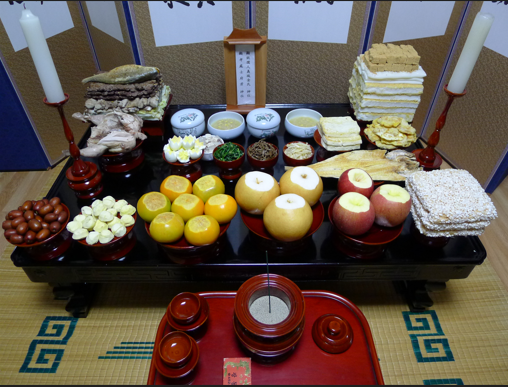
On Seollal morning, many families hold charye, a memorial service for their ancestors. A table is set with carefully arranged holiday foods, including tteokguk, jeon, meat, fish, and fruit. Family members bow together to honor their ancestors before sitting down to share the meal.
The arrangement of the charye table follows set rules, and every family does it a little differently. What stays the same is the idea: the year begins by honoring the ancestors first, and then the family eats together.
Sebae (세배): Bowing to Elders
After the morning service, children and younger family members perform sebae, a deep bow to their elders, wishing them a happy new year. The elders respond with words of blessing and give the children sebaetdon (세뱃돈), New Year’s money in small envelopes.
For many children, this is the most exciting part of the holiday. Seollal is often the one time a year when cousins who live far apart gather in one place, and the envelopes of sebaetdon are a happy reward for a morning of bowing.
Games: Yutnori and More
In the afternoon, families may play folk games together. The most famous is yutnori (윷놀이), a board game played with four wooden sticks, in which players move their pieces around a board based on how the sticks fall. Children may also fly kites (연날리기) or play jegichagi (제기차기), a game of keeping a small shuttlecock in the air with the feet. Many Seollal festivals and folk village events include these games.
Seollal Food: What’s on the Holiday Table
Food is the heart of Seollal. The holiday table is made with care and abundance, and several dishes are strongly associated with the holiday.
Tteokguk (떡국): Rice Cake Soup
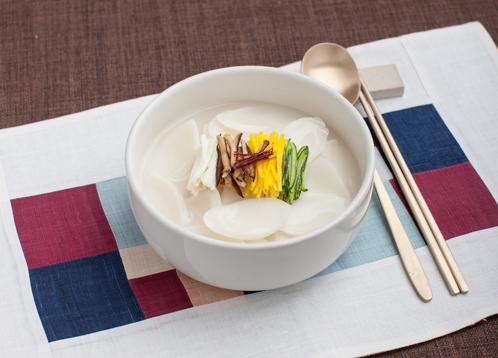
Tteokguk is the most famous Seollal food. It is a clear soup made with thinly sliced oval rice cakes, usually cooked in a beef or anchovy broth and topped with egg, seaweed, and green onion. Eating a bowl of tteokguk is how Koreans mark turning a year older — there is a well-known saying that you cannot grow a year older until you have eaten tteokguk.
Making tteokguk is a family activity. The day before Seollal, families often slice the rice cakes together, and children join in. The first bowl of the morning is shared with the ancestors on the charye table.
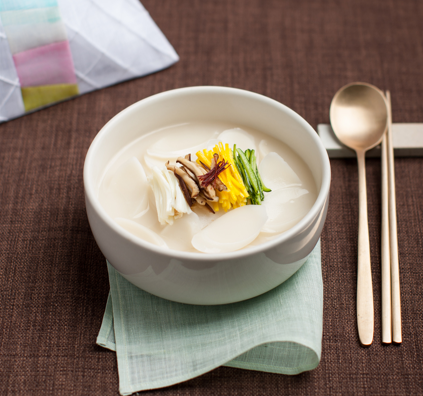
Photo: Korea Tourism Organization
Jeon (전): Savory Pancakes
Jeon are pan-fried pancakes made with ingredients coated in batter and egg. Vegetables, fish, and mushrooms are all used. On the Seollal table, jeon made with a variety of ingredients are common, and they are a classic holiday food across the country.
Hangwa and Seollal Gift Sets
The holiday table also features hangwa, Korean sweets made from grain flour, honey, and rice, along with seasonal fruit. A modern Seollal custom is the holiday gift set. Before Seollal, department stores and convenience stores fill up with boxed gifts to give to parents, relatives, teachers, and coworkers. Popular gifts include fruit boxes, cooking oil, health supplements, and hanwoo (Korean beef) sets. For many Koreans, choosing and wrapping these gifts is as much a part of the holiday as the meal itself.
A New Year With Family
Seollal is the holiday when Korea slows down and turns toward home. Families slice rice cakes together the day before, hold the morning rite for their ancestors, and children bow to their elders and receive New Year’s money. It is a custom Korean families have carried on for centuries — a New Year celebration that connects food, family, and a fresh start in a single day.